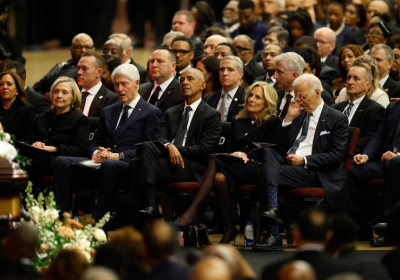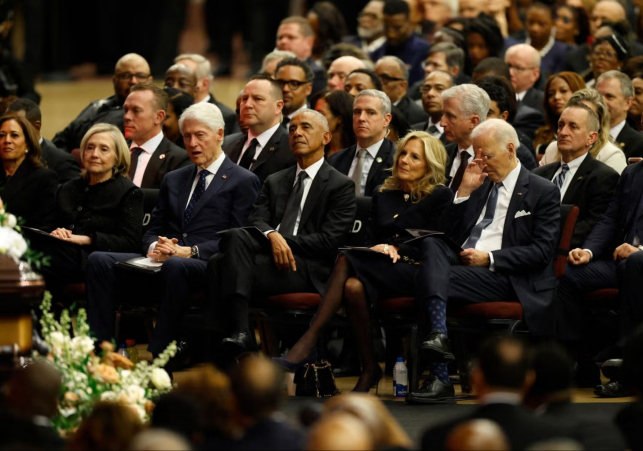
Three former presidents honor Rev. Jesse Jackson at memorial service but Trump is notably absent
- By --
- Saturday, 07 Mar, 2026
Three former U.S. presidents gathered to honor civil rights leader Rev. Jesse Jackson at a memorial service celebrating his life and legacy, while President Donald Trump was notably absent from the event, a detail that drew attention as political divisions in the United States remain sharp.
The memorial service, held at a historic church in Chicago, brought together political leaders, civil rights activists, clergy members, and members of the public to pay tribute to Jackson, who has long been one of the most influential figures in the American civil rights movement. Speakers reflected on his decades of activism, his work alongside Martin Luther King Jr., and his role in pushing for racial equality, voting rights, and social justice.
Among those attending were former presidents Barack Obama, Bill Clinton, and Joe Biden, who each delivered remarks praising Jackson’s contributions to American history. They described him as a powerful voice for the poor and the marginalized and credited him with helping shape modern civil rights politics.
Obama said Jackson’s work changed the direction of the country, while Clinton spoke about the reverend’s ability to bring together people from different backgrounds. Biden told the audience that Jackson had inspired generations of leaders to believe that change was possible through persistence and faith.
Trump’s absence from the memorial was widely noticed, especially because sitting presidents have traditionally attended major events honoring nationally recognized figures. The White House did not give a detailed explanation, but officials said the president had a full schedule related to the ongoing international crisis involving Iran and U.S. military operations in the Middle East.
Some political commentators said the absence reflected long-standing tensions between Trump and many civil rights leaders, who have often criticized his policies and statements on race and immigration. Others said the president’s decision not to attend may have been intended to avoid turning the memorial into a political controversy.
Jackson, who rose to national prominence in the 1960s, later ran for president twice and became known for his work promoting economic opportunity, education, and international diplomacy. He remained active in public life for decades and was widely respected across political lines, even by people who disagreed with his views.
The memorial included prayers, gospel music, and speeches from community leaders, with many describing Jackson as a symbol of the struggle for equality in the United States. Supporters said his influence could still be seen in modern political movements and in the diversity of leaders now serving in government.
Although the event focused on honoring Jackson’s life, the absence of the current president became part of the conversation afterward, highlighting the political tensions that continue to shape American public life even during moments of remembrance.
Related News
.jpg)